Oubaitori: The Japanese Art of Blooming at Your Own Pace
Oubaitori: The Japanese Art of Blooming at Your Own Pace
You're scrolling through your phone at 11 p.m., and you see it again: another friend's promotion announcement, another peer's vacation photo, another acquaintance launching their passion project. The familiar weight settles in your chest. Why aren't you further along? Why does everyone else seem to have figured it out?
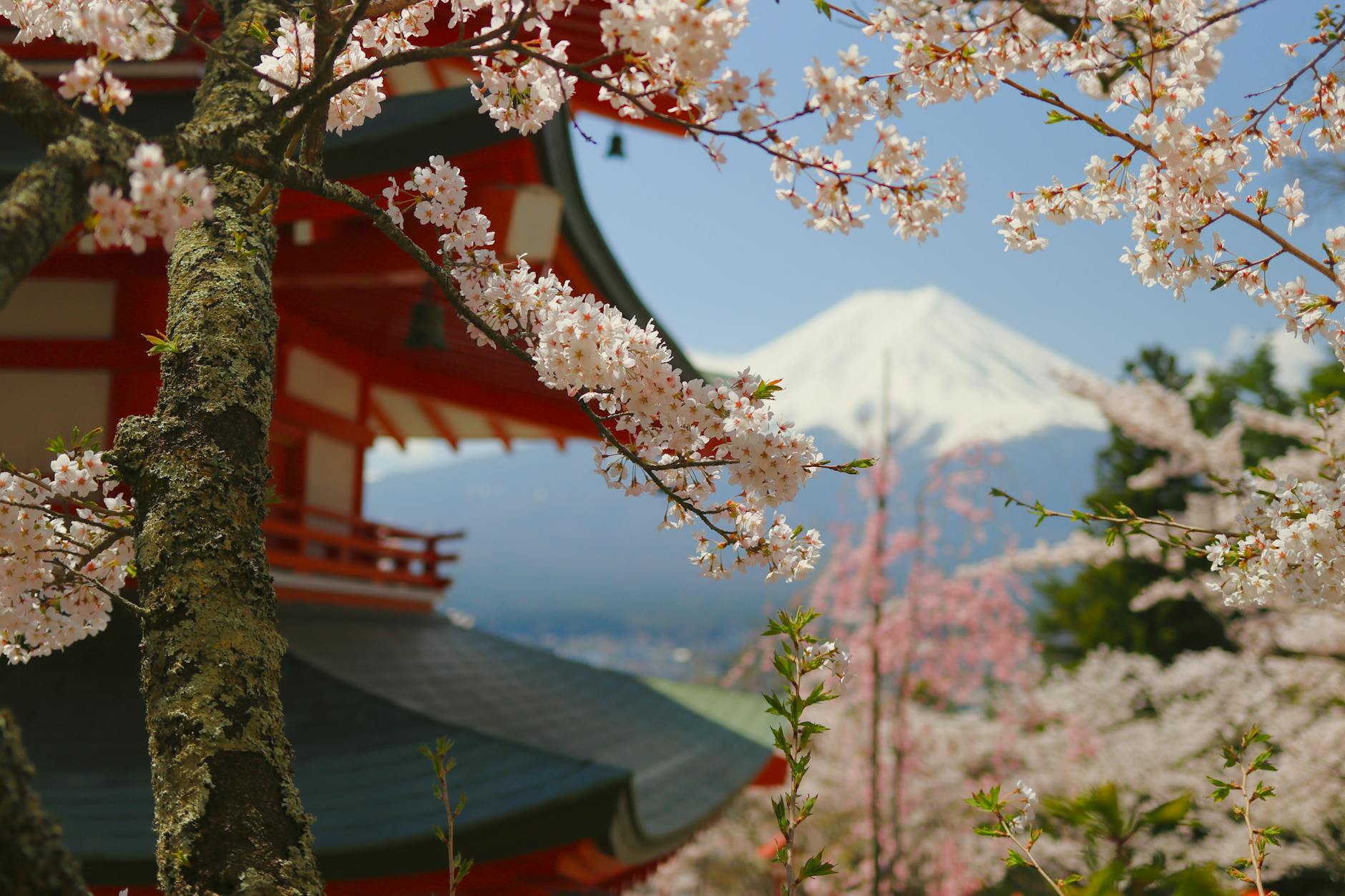
There's a Japanese concept that speaks directly to this feeling, and it might be the antidote you've been looking for. It's called oubaitori (桜梅桃李), pronounced "oh-oo-bai-toe-ee," and it contains a simple but radical truth: the cherry, plum, peach, and apricot all bloom at different times—and that's not a bug in the system. It's the whole point.
What Is Oubaitori? The Concept Explained
Oubaitori is a four-character Japanese compound word (a yojijukugo, pronounced "yo-jee-joo-koo-go"), where each character represents a different flowering tree:
- 桜 (Ou) — Cherry (*sakura*)
- 梅 (Bai) — Plum (*ume*)
- 桃 (Tou) — Peach (*momo*)
- 李 (Ri) — Apricot (*anzu*)
Literally, it means "cherry, plum, peach, apricot." Philosophically, it means something far more profound: everyone has their own timeline, and comparing yourself to others is a fundamental misunderstanding of how growth actually works.
The concept emerged from Buddhist and Confucian teachings in medieval Japan, where scholars used the natural world as a mirror for human development. Rather than viewing the staggered blooming of spring flowers as chaotic or unfair, they saw it as evidence of an intelligent natural order. Each tree blooms when conditions are right for *that particular tree*—not early, not late, but precisely on time.
You are not meant to bloom on someone else's schedule.
The Historical Roots
The concept gained particular prominence during the Edo period (1603–1867), when Neo-Confucian philosophy dominated Japanese intellectual life. Scholars like Kumazawa Banzan and Yamaga Sokō used oubaitori to teach that talent and potential vary by individual, and that forced synchronization leads to failure, not excellence. A plum tree that tries to bloom in December (when cherries bloom) won't produce fruit in May—it will simply die, exhausted and bewildered.
The metaphor was especially powerful because it linked individual timing to natural law, making the concept feel less like permission and more like truth. You weren't being "lazy" or "unmotivated" if you bloomed on a different schedule; you were obeying something deeper than willpower.
Why You Feel the Pressure to Bloom Early
Before we explore how to practice oubaitori, it's worth understanding why this concept is so urgently needed right now.
Social media has weaponized comparison. LinkedIn shows you peers promoted to director before 35. Instagram reveals friends who built six-figure businesses by 30. Your group chat buzzes with engagements, home purchases, and career pivots. The algorithm doesn't show you the people blooming at 55 or the quiet paths without flashy milestones. It shows you the early bloomers—because early blooming gets clicks.
This creates a psychological trap: you measure your worth against a highlight reel, then internalize the gap as personal failure. You're not lazy; you're being compared to a curated fiction.
Oubaitori cuts through this noise with a different metric entirely: not *when* you bloom, but whether you're blooming *authentically*—aligned with your own conditions, not someone else's spring.
Common Misconceptions About Oubaitori
Before you embrace this concept, let's clear up what it *isn't*—because there are several ways people misunderstand it.
Misconception #1: It's an Excuse for Procrastination
Oubaitori is not permission to avoid growth or delay meaningful work. The plum tree isn't sleeping through its season; it's actively preparing roots, absorbing nutrients, and readying itself for the moment conditions align. You should be doing the same—building skills, deepening relationships, clarifying your values—even if external recognition hasn't arrived yet.
Misconception #2: It Means Never Feeling Urgency
Natural timing doesn't mean no timing. A peach tree blooms in spring, not summer. There *is* a right season for your growth—you just need to distinguish between artificial deadlines (comparison-driven) and authentic ones (aligned with your actual development).
Misconception #3: It Applies Only to Major Life Events
While oubaitori works beautifully for big questions—when to change careers, when to commit to a relationship, when to start a family—it applies equally to small daily practices. Your meditation depth might unfold differently than your friend's. Your fitness timeline might not match the Instagram transformation narrative. Your creative voice might emerge at 42, not 24. All valid. All on time.
Real-World Examples of Oubaitori in Practice
Example 1: The Japanese Apprenticeship System
In traditional Japanese crafts—carpentry, ceramics, tea ceremony, sword-making—there's no fixed timeline for mastery. A carpenter might spend seven years just learning to properly sharpen tools. Another might take fifteen years before creating their first independent piece. The master doesn't rush the student; the student progresses according to their own capacity and understanding.
This isn't slowness for its own sake. It's recognition that deep skill integration can't be rushed. The apprentice who tries to match the pace of a more naturally gifted peer often burns out or produces sloppy work. The one who honors their own learning curve often becomes the more accomplished craftsperson by midlife.
Example 2: Publishing Your Writing
You've been writing for three years. Your friend started writing six months ago and just got a book deal. The initial sting is real—but oubaitori invites a different question: Are you blooming on *your* timeline, or are you measuring yourself against theirs?
Maybe you needed those three years to develop a distinctive voice. Maybe your friend's book deal came with a six-figure advance that requires them to produce three sequels in three years—which might not suit your temperament at all. Maybe you'll publish at 38, but what you create will be more meaningful because it wasn't forced. The finish line looks different depending on which direction you're running.
Example 3: Career Transitions in the West
Sarah spent her 20s in corporate marketing, felt unfulfilled, and retrained as a therapist from 2010–2015. Her peers who stayed in marketing were promoted to senior roles by 35. By 40, Sarah had built a thriving private practice aligned with her values. Neither timeline was wrong. Sarah's bloom looked different, took longer to develop, and bore different fruit.
The pressure she felt—especially around age 32, when friends were becoming directors while she was still in grad school—was real. Oubaitori doesn't erase that pressure. It reframes it as a signal to check alignment, not a verdict on worth.
Example 4: The Muromachi Painter
Sesshu Tōyō, one of Japan's greatest landscape painters, didn't produce his most celebrated work—the *Haboku Landscape*—until age 78. Early in his career, he worked as a temple priest and minor artist. By conventional measures, he "made it" late. By oubaitori measures, he bloomed exactly when he was ready. The decades of study, observation, and spiritual development weren't delays; they were the entire point.
How to Practice Oubaitori: Five Actionable Approaches
Understanding oubaitori intellectually is one thing. Living it is another. Here are concrete practices to integrate this philosophy into your life.
1. Track Your Own Metrics, Not Others'
Delete the comparison apps or at least set boundaries around them. Instead, create a personal growth journal that tracks *your* metrics: skills deepened, relationships strengthened, values clarified, resilience tested. Every two weeks, review your own progress against your own baseline—not against someone else's highlight reel.
Ask: Am I moving forward in ways that matter to me? Am I more skilled, more thoughtful, more aligned than I was six months ago? These questions have nothing to do with what your peer accomplished.
2. Identify Your Actual Season
Not every season is your season. Some periods are for learning (night school while working full-time). Some are for consolidating (staying in a job longer to deepen expertise). Some are for risk-taking (starting a venture when you have savings). Some are for rest and repair.
Spend time asking: What season am I actually in right now? What does this season require of me? What would genuine bloom look like *in this particular season of my life*, not in the season I wish I were in?
3. Reframe "Late" as "Aligned"
When you notice yourself thinking "I'm too late" or "I should have started earlier," pause. Ask: Late for whom? According to which deadline? A timeline that came from outside you (society, family, comparison) is not your timeline.
Rephrase the thought: "I'm starting now, when conditions are finally right for me." This subtle shift moves you from shame to agency.
4. Seek Out the Slow Bloomers
Your peer group heavily influences your perception of "on time." If all your friends achieved major milestones by 30, you'll internalize 30 as the deadline. Seek out stories of people who bloomed later: authors published after 50, entrepreneurs who launched their first business at 45, people who shifted careers mid-life and found their calling.
Read biographies. Join communities organized around your actual interests (not your presumed timeline). You'll be surprised how many accomplished people took unconventional paths.
5. Practice Patience as an Active Skill
Oubaitori isn't passive acceptance. It's active patience—continuing to show up, learn, refine, and develop even when external validation is absent. A cherry tree doesn't just wait passively; it photosynthesizes, drinks water, anchors its roots deeper.
Your active patience might look like: taking an online course with no immediate career payoff, journaling to clarify your values, having difficult conversations to strengthen relationships, or sitting quietly to understand what you actually want (not what you think you should want).
Join free to read these essays next:
- The Art of Living Long: What Japan's Centenarians Reveal About a Life Well-Lived
- Beyond Marie Kondo: The Deeper Japanese Philosophy Behind Minimalism
- Wabi-Sabi at Work: Finding Excellence in Your Imperfect Career
Join free to read these essays next:
- The Art of Living Long: What Japan's Centenarians Reveal About a Life Well-Lived
- Beyond Marie Kondo: The Deeper Japanese Philosophy Behind Minimalism
- Wabi-Sabi at Work: Finding Excellence in Your Imperfect Career
The Deeper Gift of Oubaitori
When you stop measuring yourself against others' timelines, something unexpected happens: you become genuinely interested in their bloom instead of threatened by it. Your friend's early promotion? You can actually celebrate it, because her timeline has nothing to do with yours. Their engagement? Beautiful. Their journey, not your comparison point.
This shift—from comparison to genuine interest—is where oubaitori becomes not just a stress-management tool but a path to real connection and peace.
You don't have to bloom like the cherry blossom in March, stunning and sudden. You don't have to prove anything by 35 or have it all figured out by 40. The peach and apricot bloom later, and no one questions their worth. Neither should you.
Your season will come. And when it does, it won't be early or late. It will be exactly right—because it will be yours.
Want the complete guide?
Our paid members get full 3,000-word practical guides with 20+ daily practices, case studies, and 30-day implementation plans for each concept. Join The Enso →
You might also enjoy
- Ikigai: The Okinawan Secret to Living Long and Living Well
- Wabi-Sabi: Finding Profound Peace in What's Broken and Incomplete
- Mono no Aware: Finding Beauty in Impermanence
The Enso — Japanese Wisdom. Every Thursday.
If something in this essay landed for you, The Enso is where I keep writing like this. No productivity hacks. No wellness brand. Just the concepts I grew up with in Kyoto — and couldn't fully see until I left, burned out, and came back.
Free members read:
- The Art of Living Long: What Japan's Centenarians Reveal About a Life Well-Lived
- Beyond Marie Kondo: The Deeper Japanese Philosophy Behind Minimalism
- Wabi-Sabi at Work: Finding Excellence in Your Imperfect Career
- Ma (間): The Japanese Art of Embracing Emptiness — and 4 more member-only essays
No credit card. Unsubscribe any time. — Kenji
The Enso — Japanese Wisdom. Every Thursday.
If something in this essay landed for you, The Enso is where I keep writing like this. No productivity hacks. No wellness brand. Just the concepts I grew up with in Kyoto — and couldn't fully see until I left, burned out, and came back.
Free members read:
- The Art of Living Long: What Japan's Centenarians Reveal About a Life Well-Lived
- Beyond Marie Kondo: The Deeper Japanese Philosophy Behind Minimalism
- Wabi-Sabi at Work: Finding Excellence in Your Imperfect Career
- Ma (間): The Japanese Art of Embracing Emptiness — and 4 more member-only essays
No credit card. Unsubscribe any time. — Kenji