Wabi-Sabi: Finding Profound Peace in What's Broken and Incomplete
Wabi-Sabi: Finding Profound Peace in What's Broken and Incomplete
You've probably experienced it: that moment when you notice a crack in your favorite ceramic bowl, or you catch your reflection in a mirror and see a new line etched across your forehead. Most of us respond with a flinch—a quick mental note to replace, repair, or resist. But what if that crack, that line, that imperfection held a kind of beauty worth contemplating? What if incompleteness wasn't a problem to solve but an invitation to understand something essential about existence itself?
This is the realm of wabi-sabi (侘寂), a Japanese aesthetic philosophy that has quietly shaped Eastern art, architecture, and philosophy for centuries. Yet it remains largely misunderstood in the West, where our default setting tends toward perfection, permanence, and polish. Wabi-sabi suggests something radically different: that imperfection is not a flaw to overcome, but a doorway to meaning, authenticity, and peace.
The Beauty Hidden in Impermanence
The term wabi-sabi itself resists easy translation. Wabi (侘) originally referred to the loneliness or melancholy of solitude, but evolved to describe an understated, modest beauty found in simplicity. Sabi (寂) carries the sense of patina—the marks left by time. Together, they form a philosophy that celebrates impermanence, incompleteness, and the humble.
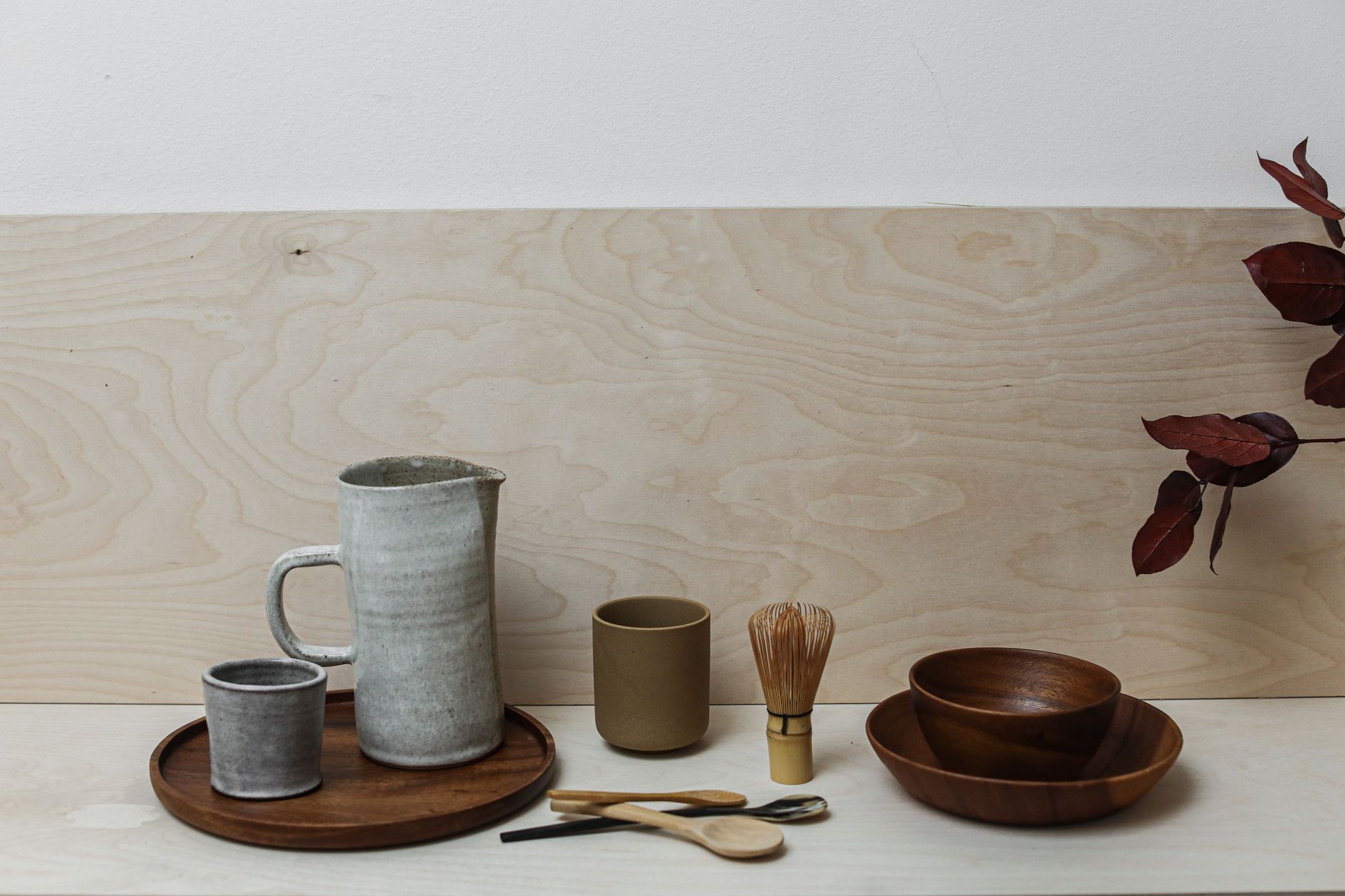
Unlike Western aesthetics, which often prizes symmetry, newness, and grandeur, wabi-sabi finds depth in asymmetry, age, and restraint. A tea bowl with an irregular glaze. A garden left partially wild. A wooden structure whose beams show weathering. These aren't seen as failures of craftsmanship but as evidence of authenticity—proof that something has lived, endured, and been used with genuine intention.
This philosophy emerged partly from Zen Buddhism, which teaches that attachment to permanence causes suffering. Wabi-sabi translates this wisdom into visual and experiential form: by training ourselves to find beauty in transience and imperfection, we align ourselves with reality as it actually is, not as we wish it to be.
Three Ways to Practice Wabi-Sabi in Daily Life
Embrace the Worn and Weathered
Rather than constantly upgrading, replacing, and refreshing, wabi-sabi invites you to develop a relationship with objects that have aged. That linen shirt that's softened after years of washing. The wooden cutting board marked with knife scars from a decade of meals. These aren't tired or shabby—they're intimate, genuine, earned. Notice how differently you might feel holding something that bears the marks of your own use compared to something pristine and new. There's a comfort in this authenticity that no flawless replacement can replicate.
Find Meaning in Incompleteness
Japanese aesthetics often employ ma (間)—the concept of meaningful emptiness or negative space. A poem that doesn't state everything. A painting where much of the canvas remains blank, inviting imagination. A conversation where silence matters as much as words. In our culture of constant content and explanation, incompleteness can feel unsettling. But wabi-sabi suggests that what's left unsaid or unfinished allows the viewer, reader, or listener to complete the meaning themselves. This transforms passive consumption into active participation. You're not just receiving beauty—you're co-creating it.
Simplify What You Keep Close
Wabi-sabi naturally pairs with minimalism, not as an aesthetic trend but as a way of honoring what truly matters. When you surround yourself with fewer things, each one gains significance. A single flower in a vase. Three carefully chosen books on a shelf. A simple wooden table. This isn't about deprivation—it's about clarity. With less visual noise, you notice more: the wood grain, the light changing through the day, the particular way a stem curves. Simplicity creates space for awareness.
Accept Decay as a Teacher
Perhaps most radically, wabi-sabi asks you to befriend impermanence in your own life. The gray hair you're dyeing. The wrinkles you're treating. The skills you're losing to time. Rather than waging constant war against these signs of change, what if you acknowledged them as evidence of a life lived? This doesn't mean abandoning self-care or vanity—it means releasing the exhausting belief that you must stay frozen. The alternative is a kind of freedom: you become less invested in the illusion of permanence and more available to the actual texture and meaning of your years.
The Quiet Revolution
In a world obsessed with optimization, curation, and control, wabi-sabi offers a counterintuitive path: toward acceptance, authenticity, and peace. It doesn't require you to abandon beauty or care—rather, it expands your definition of both. The broken, the simple, the incomplete, the aging—these aren't consolation prizes. They're where the deepest beauty lives, waiting for you to notice.
```Want to go deeper?
Our complete paid guide on this topic includes 20+ actionable practices, real-world applications, and a 30-day implementation plan. Join The Enso →
You might also enjoy
- Kintsugi: The Art of Healing What's Broken
- Mono no Aware: Finding Beauty in Impermanence
- Seijaku: The Art of Finding Stillness Within Action
The Enso — Japanese Wisdom. Every Thursday.
If something in this essay landed for you, The Enso is where I keep writing like this. No productivity hacks. No wellness brand. Just the concepts I grew up with in Kyoto — shared honestly, for people searching for a different way to live.
Free members read:
- The Art of Living Long: What Japan's Centenarians Reveal About a Life Well-Lived
- Beyond Marie Kondo: The Deeper Japanese Philosophy Behind Minimalism
- Wabi-Sabi at Work: Finding Excellence in Your Imperfect Career
- Ma (間): The Japanese Art of Embracing Emptiness — and 4 more member-only essays
Unsubscribe any time. — Kenji
The Enso — Japanese Wisdom. Every Thursday.
If something in this essay landed for you, The Enso is where I keep writing like this. No productivity hacks. No wellness brand. Just the concepts I grew up with in Kyoto — and couldn't fully see until I left, burned out, and came back.
Free members read:
- The Art of Living Long: What Japan's Centenarians Reveal About a Life Well-Lived
- Beyond Marie Kondo: The Deeper Japanese Philosophy Behind Minimalism
- Wabi-Sabi at Work: Finding Excellence in Your Imperfect Career
- Ma (間): The Japanese Art of Embracing Emptiness — and 4 more member-only essays
No credit card. Unsubscribe any time. — Kenji
The Enso — Japanese Wisdom. Every Thursday.
If something in this essay landed for you, The Enso is where I keep writing like this. No productivity hacks. No wellness brand. Just the concepts I grew up with in Kyoto — and couldn't fully see until I left, burned out, and came back.
Free members read:
- The Art of Living Long: What Japan's Centenarians Reveal About a Life Well-Lived
- Beyond Marie Kondo: The Deeper Japanese Philosophy Behind Minimalism
- Wabi-Sabi at Work: Finding Excellence in Your Imperfect Career
- Ma (間): The Japanese Art of Embracing Emptiness — and 4 more member-only essays
No credit card. Unsubscribe any time. — Kenji